
It’s a typical morning in the Spring of 2016. I wake up, and after petting my cat, Carmine, for a few minutes, I get out of bed and walk the short distance from my bedroom to my bathroom. Once there, I notice my heart pounding so hard it’s as if I’ve just run a marathon. I know I’m out of shape, but my heart rate SHOULD NOT be over 130 beats per minute.
I’m seeing a new medical resident at my clinic soon. I’ll be sure to talk to him about my concerns regarding my heart, I think. Maybe he will take it seriously.
Thus far, I’ve seen several medical residents at my clinic over the past six years, and none of them have really investigated my concerns regarding my heart palpitations.
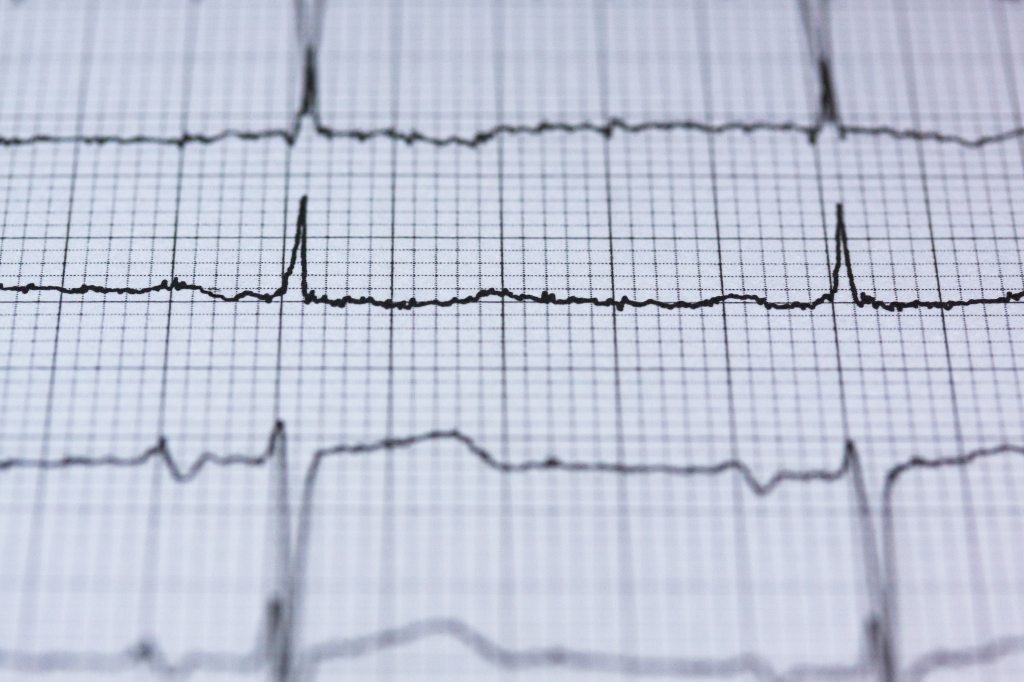
Over the past six years, I’ve had EKGs, a heart ultrasound, and worn a halter monitor for a month.
While these tests clearly show that I am having episodes of sinus tachycardia (fast heartbeat), nobody has been willing or able to figure out why this is happening. Instead, my medical residents insist that my heart palpitations are the result of anxiety. I do have Post-Traumatic Stress Disorder (PTSD), but I’ve had PTSD since I was 16 years old. I am no stranger to anxiety and how it affects my body. I know that these heart palpitations aren’t due to my anxiety. Something doesn’t feel right to me. I’m frustrated that my medical residents keep brushing my concerns aside.
My friend, Dave, and I have noticed that something odd happens during my EKGs. Every time I have an EKG, my heart rate is normal – 80 beats per minute. However, when I’m sitting up, my resting heart rate is around 100 beats per minute. He and I have begun to wonder why my heart rate is so much lower when I’m laying down.
I also notice that I often feel dizzy when I stand up. I’m sure you’ve experienced it yourself – the feeling you get when you stand up too fast – except I get this feeling nearly every time I stand.
One day, I decide to discuss these abnormalities with another friend of mine. She says it sounds as if I have POTS (Postural Orthostatic Tachycardia Syndrome). I do a little research before my appointment, and many of my symptoms seem to fit the diagnosis.
At my appointment, I bring up my concerns about my heart with my new medical resident. I explain my symptoms and how much my heart rate varies depending on whether I’m laying down or sitting up. I ask him if he could refer me for a tilt table test, the test doctors use to diagnose POTS.
His response to me was, “We are not going to give you a pacemaker.”
Wait. What? I’d asked for a diagnostic test, not an invasive treatment.
Once again, I felt discounted and invalidated. I’d had enough. In addition to brushing my heart concerns aside, this clinic had ignored several other medical problems I’d experienced over the past six years, problems that had ended up resulting in medical crises.
I made the decision to take my business to another clinic, to get a new doctor. I was anxious about getting a new doctor, but I told myself that a new doctor couldn’t possibly be any worse than the medical resident I currently had!
At my first appointment with my new doctor (not a medical resident), I was impressed with how attentive and on top of things she was. Before she ended the appointment, she asked me if I had any more concerns she could address. I looked at my friend, Dave, and we began to tell her about my heart palpitations and how my heart rate varied based on what position I was in.
My new doctor immediately stated that this sounded like POTS. She sent a nurse in to take my blood pressure when I was laying down, sitting up, and standing. My doctor told me that there were drops in my blood pressure when I was sitting and standing (a hallmark of POTS) but that a tilt table test was really the gold standard for diagnosing the condition. She immediately referred me for the test.
A few weeks later, my cardiologist strapped me to the table for the test. I was a little nervous – what if this wasn’t the answer I’d been searching for for so long?
During a tilt table test, you’re raised to a 60 to 80-degree angle. Your blood pressure and heart rate are monitored to see how they respond when you go from laying down to a nearly vertical position.
My cardiologist informed me that I could ask him to stop the test at any time if I wanted to. He raised me up to an 80-degree angle. I stood there a mere few minutes before I began to feel hot, even though the room was freezing cold. Next, a massive wave of nausea overtook me. Finally, I felt incredibly dizzy. The nausea and dizziness were so overpowering that I couldn’t tolerate it any longer. I began to panic a little and asked my cardiologist to lower me back down.
Afterward, he told me that my blood pressure had dropped to 60/40 and my heart rate had gone up to 115 beats per minute. He was surprised I hadn’t lost consciousness.
We finally had an answer. He made the diagnosis of POTS and scheduled an appointment with me to begin trying to figure out a treatment plan.
I’ve been working with my cardiologist for the past three years trying to manage the symptoms of POTS. It took a few tries, but we have found a beta blocker that controls my heart rate without affecting my asthma. However, despite our attempts to normalize my blood pressure, I still struggle with sudden blood pressure drops when I stand. Nearly every time I stand up, I get incredibly dizzy. I’ve learned to recognize the signs that indicate I’m going to pass out – I’ve fallen a few times, but I’ve not injured myself in the process thus far.
My experience is not unusual. Many people with POTS have trouble getting a diagnosis — many people wait months, or even years. If you’re struggling with a health condition right now, don’t give up. Don’t let any doctor discount your symptoms or brush you off. Get a second, third, or fourth opinion if you need to. Follow your instincts. Remember, you know your body best, and if you feel something isn’t right, there’s likely a reason for it. Don’t stop searching until you find the answers you need.
Sierra Koester is a freelance writer and professional blogger specializing in pets, health, and psychology. She has worked with several notable pet brands and is a professional member of the Cat Writers’ Association.
 chronicallycarly.com
2 thoughts on “My Journey to a POTS Diagnosis”